When companies begin building or expanding a Global Capability Center, the first step is usually a hiring ramp plan. These plans estimate how many engineers, analysts, or specialists need to be hired over a certain period of time. In many cases, the plan assumes that all roles follow similar hiring dynamics. Recruiters begin sourcing candidates, interview pipelines are set up, and hiring targets are assigned to teams. On the surface, GCC hiring appears to be a straightforward process of scaling a workforce to meet delivery goals.
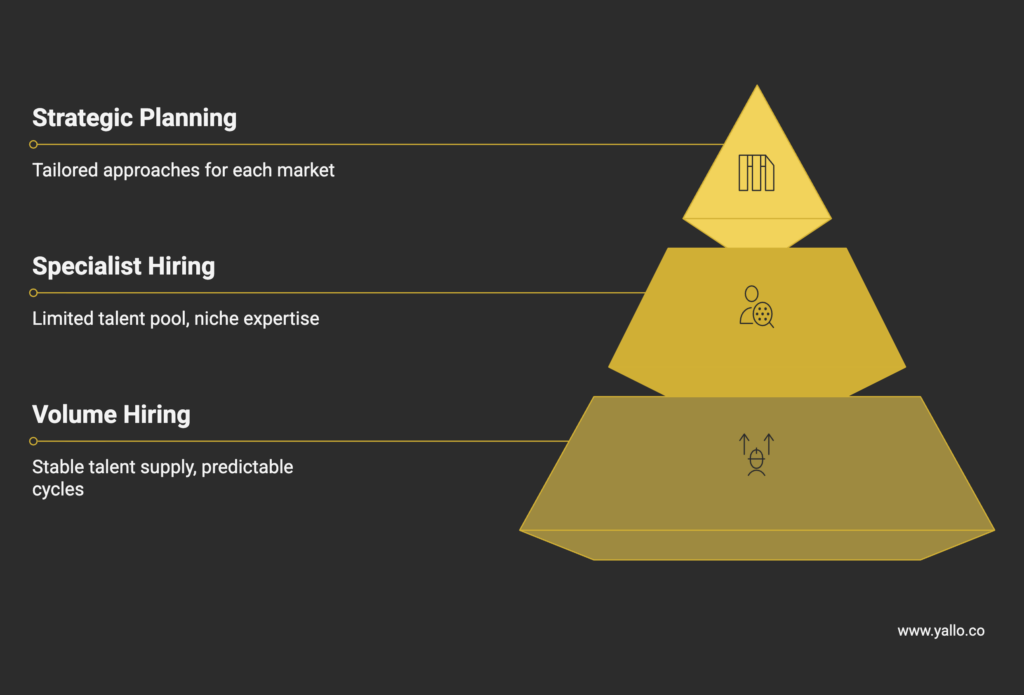
This assumption works well for some roles because many positions in a GCC follow predictable hiring patterns. For example, roles such as software developers, analysts, and testing engineers usually have a steady supply of candidates in the talent market. Universities produce new graduates every year, experienced professionals move between companies regularly, and recruitment channels are already well established. Because of this, organizations often build their GCC hiring strategy around the expectation that most roles can be filled within a similar timeframe.
The challenge appears when the same hiring assumptions are applied to every role in the ramp plan. Not all positions belong to the same talent market. While some roles have a large and accessible talent pool, others require very specific experience that exists within a much smaller group of professionals. When ramp plans treat these two hiring environments as one, delays often begin to appear. Certain roles fill quickly, while others remain open for weeks or even months, slowing the overall team ramp.
This is where many organizations begin to realize that GCC hiring does not operate in a single talent market. Instead, it functions across two very different hiring environments, each with its own supply dynamics, timelines, and challenges. Understanding this difference is essential for building realistic ramp plans and avoiding unexpected hiring delays.