Why Enterprise Architects Are the Hardest Role to Hire in UAE Right Now
The demand for enterprise architects is rising faster than supply, creating hiring bottlenecks for SAP, cloud, data, and transformation programmes across UAE.
Enterprise architecture has become one of the most critical functions in modern transformation programmes. Whether organizations are implementing SAP S/4HANA, modernizing cloud infrastructure, building data platforms, or launching AI initiatives, enterprise architects are often responsible for aligning technology decisions with business outcomes.
The challenge is that demand has increased significantly across UAE while the number of experienced architects has remained relatively limited. Large enterprises, government initiatives, Global Capability Centers, and digital transformation programmes are all competing for professionals with similar backgrounds.
Unlike many technical roles, enterprise architects cannot be developed overnight. Most have spent years working across engineering, infrastructure, applications, and business strategy before moving into architecture leadership positions. This naturally limits the size of the available talent pool and makes hiring increasingly competitive.
Why experience matters more than credentials in architecture roles
One of the biggest misconceptions in hiring enterprise architects is assuming that certifications alone indicate readiness for the role. While certifications demonstrate knowledge of frameworks and methodologies, they do not necessarily prove the ability to lead complex transformation programmes.
Organizations often discover this distinction during implementation. An architect may understand architecture principles but struggle to manage stakeholder expectations, evaluate competing priorities, or make decisions within a complex enterprise environment.
Strong enterprise architects combine technical depth with business understanding. They are expected to communicate with executives, guide engineering teams, evaluate technology investments, and ensure long term architectural alignment. This combination of capabilities is rare, which is one reason the Enterprise Architect UAE market remains highly competitive.
How architecture vacancies create delivery risks across programmes
Many organizations begin searching for an enterprise architect only after a programme is already underway. By that point, architecture decisions are becoming urgent and teams need direction immediately.
When the role remains vacant, delivery teams often make independent decisions based on local requirements rather than overall programme objectives. Over time this creates inconsistencies, duplicated effort, and technical debt that becomes expensive to correct later.
The impact extends beyond architecture itself. Infrastructure planning, application integration, cloud migration, data governance, and vendor selection frequently depend on architectural guidance. Without it, delays can spread across multiple workstreams simultaneously.For this reason, the cost of an unfilled architecture role is rarely limited to recruitment. It often appears later as delivery delays, rework, and increased programme complexity.
Newsletter
Get the latest updates and insights delivered to your inbox.
Thank you!
You have successfully joined our subscriber list.
Organizations are changing how they hire architects
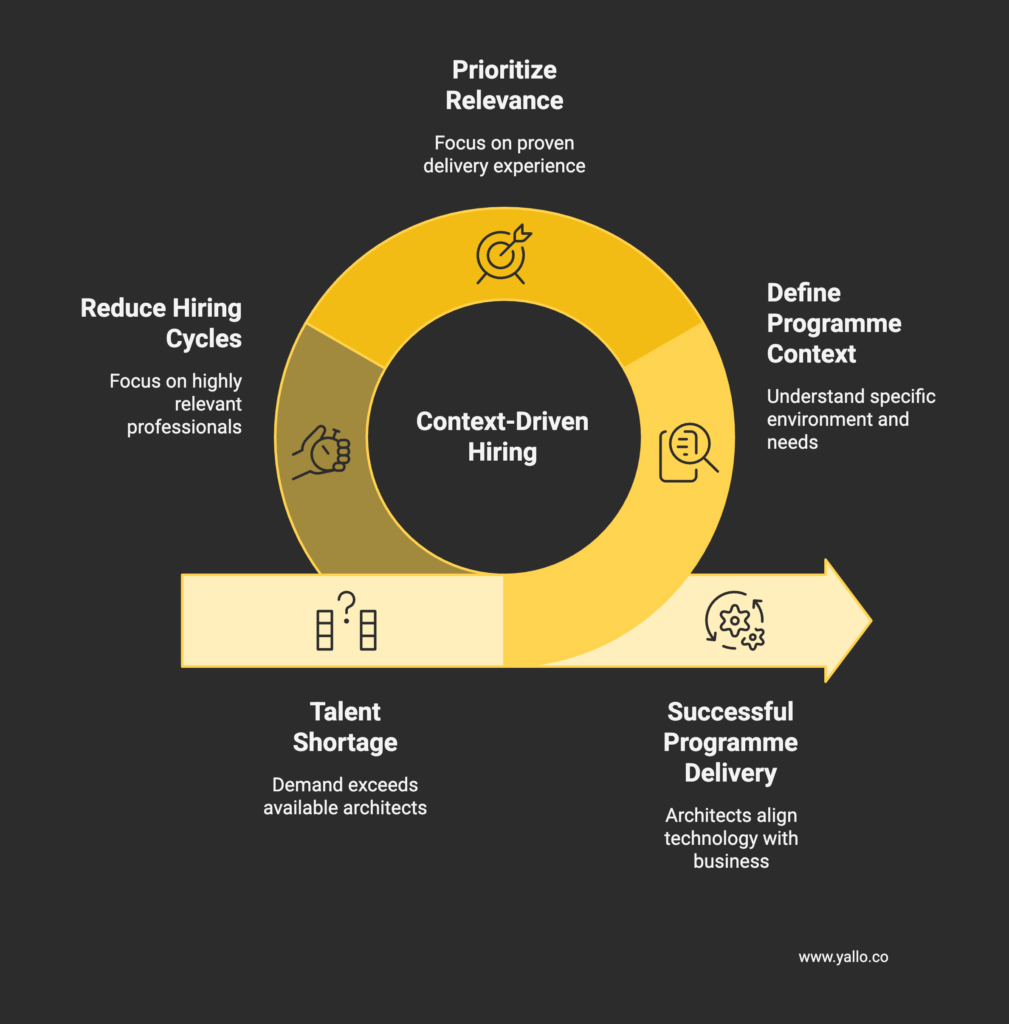
As competition for architecture talent increases, organizations are moving away from traditional recruitment approaches that focus primarily on volume. Instead of reviewing dozens of profiles, hiring teams are prioritizing relevance, programme fit, and proven delivery experience. The most successful hiring strategies begin with a clear understanding of programme context. Rather than searching for a generic enterprise architect, organizations define the specific environment, industry requirements, technology landscape, and transformation objectives involved.
This allows candidates to be evaluated against actual delivery needs rather than broad job descriptions. It also reduces hiring cycles by focusing attention on a smaller group of highly relevant professionals. This is the approach Yallo follows when supporting enterprise programmes, helping organizations identify architects who align with both the technical requirements and the broader execution goals of the programme.
How Context Driven Hiring Improves Enterprise Architect Hiring Outcomes
Enterprise architects have become one of the most important roles in modern transformation programmes, yet they remain one of the most difficult positions to hire. As demand continues to grow across cloud, SAP, data, and AI initiatives, organizations that treat architecture hiring as a strategic priority rather than a reactive recruitment task will be better positioned to maintain delivery momentum. This is where specialist talent partners like Yallo help bridge the gap, connecting enterprise teams with experienced architects who can contribute from day one.
As demand for enterprise architects continues to grow across cloud, SAP, data, and AI initiatives, organizations can no longer afford to approach architecture hiring as a reactive recruitment exercise. The most successful teams focus on programme context, proven delivery experience, and long-term alignment from the very beginning. This is where Yallo helps bridge the gap, connecting enterprise organizations with pre-qualified architecture and technology specialists who are aligned to programme requirements and capable of contributing from day one, helping reduce hiring delays and maintain delivery momentum.
Recent Post
Questions About Specialist Hiring, Answered
Enterprise architects require a rare combination of technical expertise, business understanding, leadership skills, and experience across multiple technology domains. As organizations invest heavily in cloud transformation, ERP modernization, AI initiatives, and digital transformation programmes, demand for experienced architects has grown much faster than the available talent pool.
Beyond technical knowledge, strong enterprise architects should have experience in technology strategy, solution design, stakeholder management, governance, and large-scale programme delivery. The ability to align business objectives with technology decisions is often more valuable than certifications alone.
The hiring timeline varies depending on the complexity of the role and market conditions, but experienced enterprise architects are often harder to source than other technology professionals. Organizations may spend several weeks identifying, evaluating, and securing the right candidate, particularly for transformation programmes that require domain-specific expertise.
Why do enterprise architects have such a significant impact on programme success?
Successful hiring starts with clearly defining programme requirements and evaluating candidates based on relevant delivery experience rather than certifications alone. Many organizations also work with specialist talent partners such as Yallo to access pre-qualified architecture professionals who have experience in enterprise transformation programmes and can contribute from the early stages of delivery.