Digital Transformation Is About Talent Not Technology

Why the success of any digital initiative depends more on people, skills, and culture than on tools and platforms.

November 13, 2025 8 mins Read Insight

Introduction

Digital transformation is often misunderstood as a technology project, but in reality it depends far more on people than on systems. Many organisations invest heavily in tools, automation platforms, dashboards, and new software with the belief that these upgrades will automatically change how the business works. But real change only happens when the people inside the organisation understand how to use those tools, why they matter, and how they can improve everyday decisions. Without that alignment, even the most advanced technology becomes another unused feature sitting in the background of the business. Most of the challenges companies face during transformation are not technical. They come from the way teams think, work, and respond to change. Employees may feel unsure about new workflows, leaders might struggle to communicate a clear purpose, and different departments often adopt tools at different speeds. These gaps create friction, slow down projects, and eventually lead to the feeling that “the technology isn’t working,” when in reality the people who are meant to use it were never fully prepared or supported. When talent is not empowered, technology delivers only a fraction of its potential.

Organisations that succeed with digital transformation follow a very different path. They focus first on building the right mindset and skills across their teams, helping people become more comfortable with experimentation, data-driven thinking, and new digital processes. Instead of expecting immediate results from new systems, they invest time in training, cross-functional collaboration, and real conversations about how work will evolve. When teams feel included, capable, and confident, they start to use technology more naturally and more creatively, often finding improvements that weren’t part of the original plan. This people-first approach also creates a culture where transformation is not a one-time project but a continuous habit. Technology will always keep changing, but when an organisation has the talent, curiosity, and resilience to adapt, every new tool becomes easier to adopt. That is why companies with strong digital talent often move ahead faster than competitors with bigger budgets or more complex systems. They understand that transformation is not something they buy, it is something they build from the inside.

The misunderstanding around digital transformation

Many organisations still see digital transformation as a collection of tools, platforms, and upgrades. They assume that investing in new technology will automatically make their business modern, efficient, and competitive. This mindset is common because technology is often the most visible part of transformation. It looks impressive, it seems measurable, and it feels like a quick solution to long-term challenges. But this view is incomplete, because technology by itself cannot shift the way a company thinks or operates. Without the right people and skills behind it, even the most advanced systems perform far below their potential. The misconception becomes clearer when you look at how digital projects typically unfold. A new platform is introduced with the promise of streamlining work, improving collaboration, or unlocking better insights. But if teams are not aligned with the purpose of the change, or if they don’t have the confidence to adapt their workflows, the technology ends up being used in the same old ways. Dashboards remain unopened, automation features are ignored, and decision-making continues based on familiar habits rather than real data. This “technology-first” approach creates the illusion of progress while the underlying business remains unchanged.

Another common misunderstanding is the belief that transformation happens when all the right systems are in place. In reality, transformation begins much earlier, with mindset, capability, and culture. It starts when employees feel safe to experiment, when leaders communicate clearly, and when teams learn to work across departments instead of in silos. These behaviours cannot be automated or purchased. They grow through training, collaboration, and everyday practice. When this human foundation is missing, transformation becomes fragile and short-lived. There is also a tendency to overestimate the role of speed. Many organisations feel pressured to adopt new technology quickly, thinking that being early or fast will give them an advantage. However, transformation is not a race. It is a journey shaped by understanding, adaptation, and consistent learning. A company that moves slowly but builds strong talent alignment will outperform one that rushes into new tools without preparing its people. The most successful transformations are steady, deliberate, and grounded in clarity rather than urgency.

The real shift happens when organisations stop treating technology as the centre of transformation and begin recognising it as a tool that supports people, not the other way around. Once companies understand this, their digital efforts become more focused and more meaningful. Teams feel less overwhelmed, leaders see more genuine progress, and technology becomes easier to adopt because it fits into a culture that is ready to grow. Transformation becomes not just a technical upgrade but a more capable, connected way of working across the entire organisation. A lot of confusion around digital transformation comes from treating it as a technical upgrade rather than a complete shift in how people, teams, and operations work. To understand what actually shapes a successful transformation, it helps to look at the foundational elements that organisations focus on before introducing new tools. These elements highlight the human and operational groundwork that must be in place long before technology enters the picture.
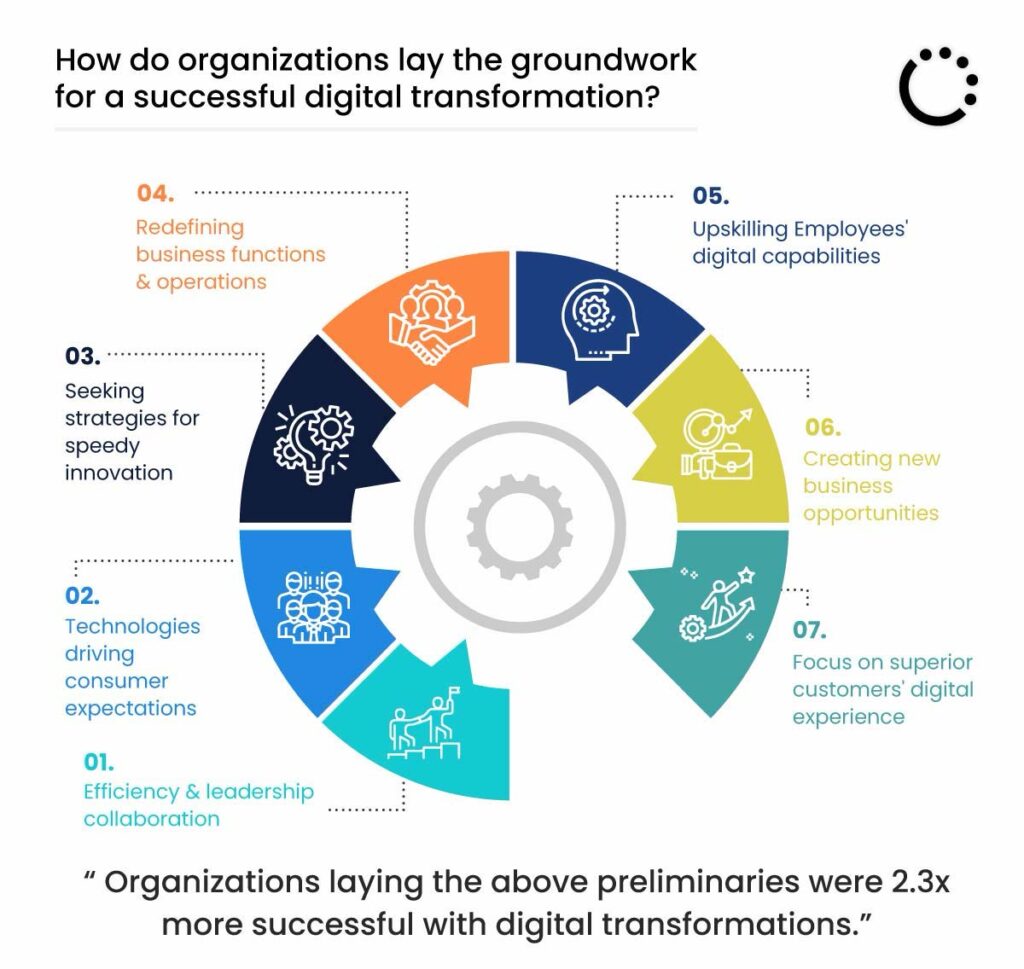
Circular infographic showing key steps for digital transformation, including leadership collaboration, consumer expectations, innovation strategies, upskilling, new business opportunities, and customer experience focus.
Core foundations that help organisations prepare for meaningful and sustainable digital transformation. Source: Global Lancers

What this visual makes clear is that technology comes later in the journey, not at the beginning. The real groundwork involves aligning leadership, redefining operations, preparing teams, and building new capabilities. Organisations that focus on these areas are far more likely to see real results because their people are ready to support and adapt to change. This supports the idea that transformation succeeds when the cultural and talent foundations are strong, not just when the right tools are purchased.

Why people shape the real outcome of transformation

The success of any digital change depends on how people respond to it, not on how advanced the technology is. When employees understand why a new system matters and how it improves their daily work, they adopt it more naturally and often find new ways to use it. But when they feel unsure, unprepared, or disconnected from the purpose, the technology becomes a burden instead of an advantage. This is why transformation succeeds only when teams feel supported, trained, and included in the process. The most common friction in digital initiatives appears when new tools are introduced without clear communication. Employees may worry about losing control, losing relevance, or being replaced by automation. These quiet anxieties slow down adoption more than any technical challenge. When leaders take the time to explain the vision, offer training, and encourage experimentation, the resistance fades and curiosity grows. People begin to see the technology as something that helps them rather than something that threatens them.

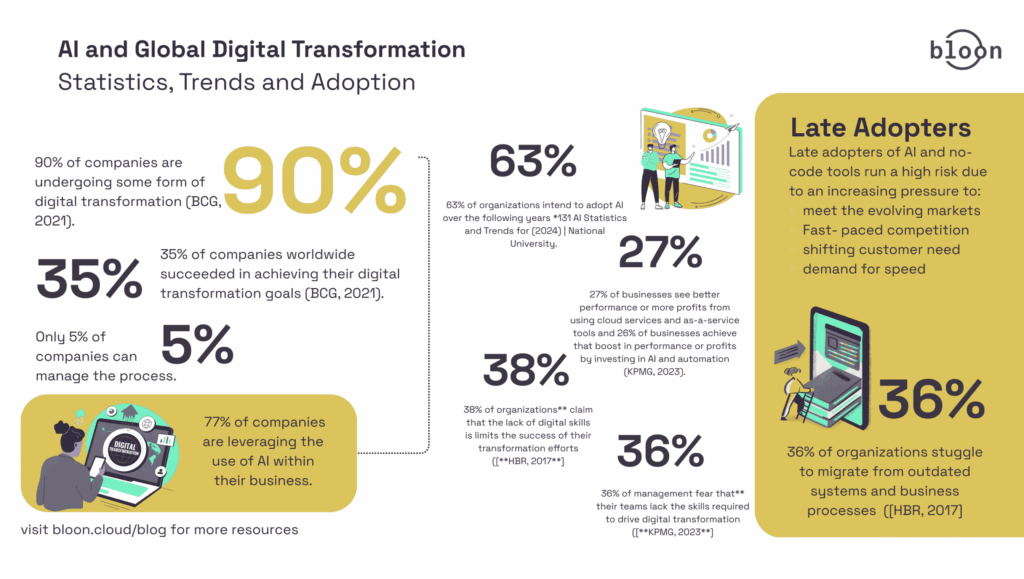
Another key factor is collaboration. Transformation rarely works when it is owned by a single department like IT or operations. It requires different teams to share insights, test new ideas, and adjust processes together. When people work in silos, even good technology creates isolated improvements. But when they collaborate across roles, the benefits become wider workflows become smoother, decisions become clearer, and the organisation starts working as one unified system. Transformation becomes sustainable only when people feel confident using the tools and have the freedom to improve them. When employees take ownership, they help refine systems, identify better processes, and turn technology into real value. This human momentum is what keeps transformation moving forward long after the initial rollout. It proves that while technology may open the door, it is people who ultimately walk through it and shape what happens next. Digital transformation is growing across industries, but the results vary widely depending on how prepared organisations are and how their people adapt to change. The numbers behind these initiatives show a clear pattern. Many companies are eager to adopt AI and new systems, but only a small percentage achieve the outcomes they expected. This happens because technology adoption is high, but the readiness, capability, and cultural alignment needed to support that technology often lag behind. The infographic below highlights these global patterns and makes it easier to understand where organisations succeed and where they struggle.


Infographic showing global digital transformation statistics including adoption rates, success rates, AI usage, skill gaps, management concerns, and the risks faced by late adopters. Includes data points such as 90 percent of companies undergoing transformation, only 35 percent achieving goals, 77 percent using AI, and 36 percent struggling due to outdated processes.
Key statistics showing global digital transformation trends, adoption levels, and the people-related challenges that influence success. Source: Bloon

These numbers clearly show that while digital transformation is happening almost everywhere, meaningful results depend on far more than technology investment. High adoption rates do not automatically translate into success, and many organisations still struggle because their teams lack the digital skills or the support needed to work confidently with new tools. The large gap between companies that attempt transformation and those that achieve it reinforces the core message of this blog: technology alone cannot deliver long-term impact. Real progress comes when organisations invest in their people, build stronger capabilities, and create a culture where change feels manageable rather than overwhelming. When talent grows alongside technology, transformation becomes both achievable and sustainable.

The skills that make digital transformation work

Modern technology brings new possibilities, but it also requires new mindsets and capabilities from the people using it. The skills that matter most today are not purely technical. They are a mix of curiosity, adaptability, data awareness, and collaborative thinking. These skills allow employees to work confidently with digital tools and adjust quickly as systems evolve. When teams develop these abilities, technology becomes easier to understand and easier to integrate into daily work. A growing number of organisations now recognise that the ability to learn is more valuable than the ability to follow fixed instructions. Tools change, but a flexible and open mindset allows people to keep up with those changes. Employees who can experiment, try new features, question old processes, and think with data help the organisation move forward more naturally. They turn technology into a practical advantage instead of a complicated addition.

Digital transformation also requires stronger collaboration across departments. A project may start with a technology team, but its success depends on how well operations, marketing, HR, finance, and customer-facing teams adopt and use it together. When these groups share information and test new workflows jointly, they create a smoother, more consistent experience for customers and employees. This connected way of working is what turns technology from a tool into a full transformation effort. Developing these skills does not happen by accident. It comes from training, workshops, hands-on practice, and a culture where people feel encouraged to learn new things. Companies that invest in this kind of capability-building find that their teams become more confident and that new tools become easier to adopt. In the long run, these skills become the foundation that keeps transformation moving, even as technology continues to shift.

How technology fails when talent is not prepared

Many digital initiatives fall short not because the tools are weak but because the people using them were never given the chance to learn, adapt, and grow with the change. When teams feel unprepared or disconnected, technology quickly becomes overwhelming. Dashboards stay unused, automation features get ignored, and daily work continues in the familiar old way. The gap between what the technology can do and what people are ready to do widens, creating frustration on both sides. A common example is when companies introduce a new system expecting instant results. Teams are often handed a platform with little context, minimal training, and tight timelines. Without proper guidance, employees struggle to understand how the new tool fits into their work. They may rely on old habits because those feel safer and more predictable. Over time, leaders start believing the technology is ineffective, when the real issue is that people were not supported from the start.

Technology also fails when organisations overlook the emotional side of change. Employees may worry about losing their role, losing expertise, or being replaced by automation. These concerns quietly influence how they interact with new tools. When leaders don’t address these emotions openly, resistance builds even in small ways, avoiding new features, delaying adoption, or preferring manual steps. This slows down transformation more than any technical issue ever could. Another challenge arises when digital projects are owned by one department and delivered to everyone else. When IT builds a system without involving the teams who will actually use it, the end result often feels disconnected from real workflows. Employees then struggle to fit their day-to-day work into a tool that wasn’t designed with their needs in mind. This misalignment leads to low usage, frustration, and costly rework.

But when organisations prepare their talent early, include them in the journey, and give them the support they need, technology becomes far easier to adopt. Teams begin to explore new features, share ideas, and refine processes together. The transformation grows naturally because people feel confident, included, and ready to shape how the new tools work. It becomes clear that the success of any digital initiative depends not on what technology promises, but on what people are equipped to do with it.

Building a people first approach for long-term transformation

Lasting digital transformation happens when organisations place people at the centre of every decision. Technology may create opportunities, but it is talent that turns those opportunities into progress. When employees feel confident with new systems, understand why changes are being made, and have the support to grow their skills, the entire organisation moves forward together. Transformation becomes a shared journey instead of a top-down instruction. A people-first approach encourages learning, experimentation, and collaboration. It creates an environment where employees feel safe to try new tools, question old processes, and suggest improvements. This mindset not only increases the success of digital initiatives but also builds a stronger internal culture. Teams become more adaptable, more curious, and more open to change, qualities that matter far more than any single tool or platform. Over time, this culture becomes the engine that keeps the organisation evolving.

Companies that recognise the importance of talent also build more sustainable digital strategies. Instead of chasing every new trend or platform, they focus on developing the capabilities that allow them to understand and use technology wisely. They move with intention rather than urgency, choosing solutions that fit their people instead of forcing their people to fit the technology. This balance ensures that transformation remains practical, meaningful, and relevant to everyday work. As more organisations reshape their digital direction, many look for guidance from real examples and practical insights. This is where resources like Yallo’s case studies and insights become valuable. They highlight how different businesses align people, processes, and technology in a way that supports both growth and culture. These stories show the human side of transformation, the skill development, the collaboration, the mindset shifts, and the everyday improvements that make technology work in the real world.

In the end, digital transformation is not defined by the amount of technology a company has, but by how effectively its people can use it to improve decisions, simplify workflows, and create better experiences for customers. Organisations that invest in talent, training, and culture see longer-lasting results because their teams are ready to grow with every new digital step. Technology may accelerate the journey, but people are the ones who make the transformation real, and the ones who turn strategy into impact.

Leave a Comment

Your email address will not be published. Required fields are marked *

Scroll to Top