The True Cost of Delayed Hiring in Enterprise Technology
Uncover how slow hiring processes silently drain productivity, revenue, and innovation
—and what enterprise tech leaders must do to stop it.
January 22, 2026
5 mins Read
Insight
The True Cost of Delayed Hiring in Enterprise Technology
Identify, Quantify, and Eliminate Hiring Delays with Data-Driven Strategies
Delayed hiring isn’t just a recruitment challenge — it’s a high-stakes strategic risk that silently erodes enterprise performance. In a competitive, innovation-driven tech landscape, every unfilled role compounds critical delays in product delivery, digital transformation, and operational scalability. Teams become stretched, deadlines are missed, and high-value opportunities slip through the cracks. To maintain momentum and resilience, enterprise leaders must proactively identify workforce bottlenecks, reduce time-to-hire, and adopt agile, data-powered strategies that align talent acquisition with long-term business goals.
The High-Stakes Business Consequences of Delayed Hiring in Enterprise Tech
The Real Impact of Delayed Hiring
1. Productivity Losses That Ripple Across Teams
When key tech roles remain unfilled, existing employees often shoulder the extra workload. This leads to overworked teams, decreased output quality, delayed releases, and an overall drop in operational efficiency. The ripple effect can stall projects and even impact other departments relying on tech delivery.
2. Increased Cost Per Hire
Every extra day a position stays open translates into increased recruiter hours, prolonged use of job boards, repeated interview cycles, and internal resource strain. A slow hiring process often forces companies to pay higher salaries or offer sign-on incentives just to secure top talent later—multiplying overall acquisition costs.
3. Missed Revenue Opportunities
Delayed hiring can mean missing critical go-to-market timelines, product launch windows, or customer onboarding targets. The result? Delayed revenues, lost deals, and compromised client satisfaction. For enterprise tech firms, these financial leaks are rarely visible on the surface—but they are real and cumulative.
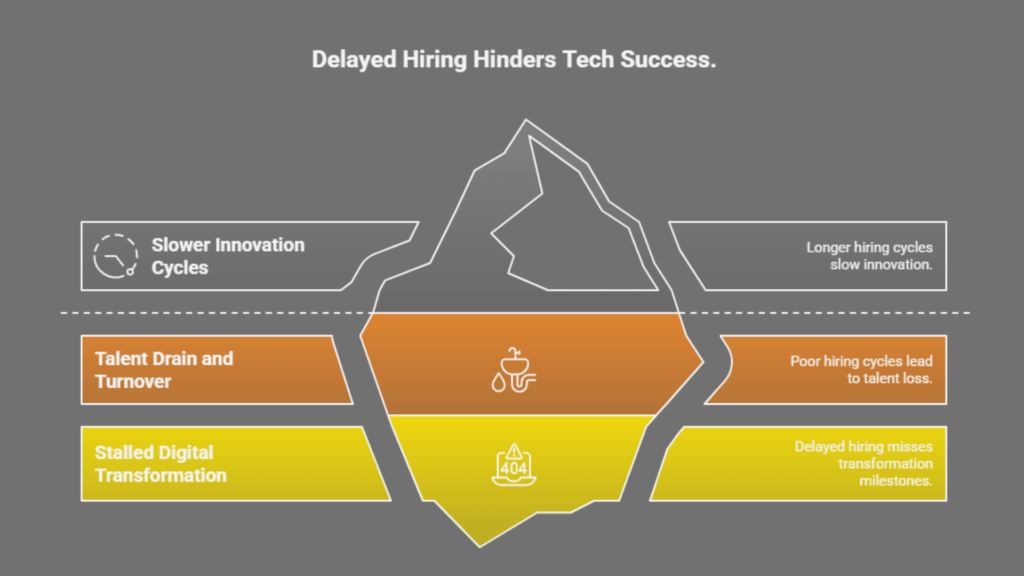
The Iceberg Effect of Delayed Hiring in Enterprise Tech
How to Solve It: Fast, Strategic Hiring
1. Streamline Decision Cycles
Minimize excessive interview rounds and simplify stakeholder involvement. Establish clear hiring scorecards and decision-making authority to accelerate offers.
2. Build Always-On Talent Pipelines
Don’t wait for a vacancy to start sourcing. Use proactive talent pooling, freelance networks, and internal referrals to ensure a steady flow of qualified candidates ready to go.
3. Automate and Optimize with Technology
Leverage AI-driven tools for candidate screening, scheduling, and assessment. Use data to identify bottlenecks in your hiring funnel and refine your approach continuously.
Turning Hiring Speed into a Strategic Advantage
Delayed hiring is more than an operational hiccup—it’s a strategic vulnerability with cascading effects across enterprise technology functions. From missed product deadlines and rising acquisition costs to team burnout and lost market momentum, the risks grow silently with every unfilled role. Addressing these challenges requires more than reactive recruitment—it demands a proactive, streamlined approach rooted in speed, precision, and agility.
That’s why more tech-forward enterprises are turning to solutions that reduce friction in the hiring journey. With talent delivery platforms like Yallo, organizations can gain the clarity and capacity needed to accelerate hiring, align talent with transformation goals, and build resilience into every growth initiative—without compromising on quality or control.
Newsletter
Get the latest updates and insights delivered to your inbox.