The Best Way to Use Contract Hiring During High-Demand Enterprise Projects
How contract hiring helps enterprises scale capability, reduce delivery risks and maintain momentum during periods of intense project demand.
November 17, 2025
6 mins Read
Insight
Why Contract Hiring Has Become Essential for High-Demand Enterprise Projects
Enterprises today operate in environments where project timelines accelerate quickly, transformation programs expand without warning and technical workloads evolve faster than internal teams can absorb. Traditional hiring structures were never designed for this level of unpredictability. They move slowly, rely on multi-stage approvals and often struggle to secure specialised talent within the timeframes modern delivery demands. As a result, high-demand projects frequently outpace internal workforce capacity, creating capability gaps that increase project risk and slow down execution. This is the precise moment where contract hiring becomes an essential strategic tool rather than a temporary outsourcing tactic.
Contract hiring gives enterprises the ability to scale talent intelligently, bringing in on-demand specialists who strengthen delivery without waiting for permanent recruitment cycles. When engineering workloads spike, when cloud or data initiatives intensify or when transformation programs begin overlapping, contract talent provides immediate capability that protects teams from overload and prevents delays from turning into systemic issues. Instead of pausing initiatives until hiring catches up, organisations can extend their workforce capacity at the exact moment it is needed. This flexible talent model helps enterprises maintain speed, reduce operational strain, reinforce technical execution and ensure their teams remain focused on high-value responsibilities even during peak pressure cycles.
How Contract Hiring Helps Enterprises Reduce Delivery Risk and Capability Gaps
High-demand cycles reveal the operational pressure points that often remain invisible during routine project work. As enterprises accelerate digital transformation, migrate to cloud platforms, modernise data ecosystems or expand AI-led initiatives, their internal teams face rising complexity that stretches both capacity and capability. Projects begin to stack on top of one another, architectural decisions become time-sensitive and delivery workloads intensify faster than traditional workforce planning can adapt. In these conditions, relying exclusively on permanent recruitment creates unavoidable delays because hiring pipelines approvals, interviews, notice periods move slower than the evolving demands of modern enterprise delivery. The result is a widening capability gap that affects momentum, quality and cross-functional alignment.
This widening gap becomes even more apparent when multiple initiatives converge at the same time. A cloud program may require deep infrastructure expertise at the same moment a data platform modernization needs pipeline engineers. AI pilots might demand specialised MLOps capability while ongoing product development requires additional backend engineers. Internal teams cannot absorb every emerging need while still maintaining their existing responsibilities. As these pressures grow, decision-making slows, technical debt rises and high-value roles become overloaded. Enterprise leaders often underestimate these cumulative effects because the symptoms appear gradually missed checkpoints, extended sprint cycles, delayed reviews and increasing fatigue among key contributors.
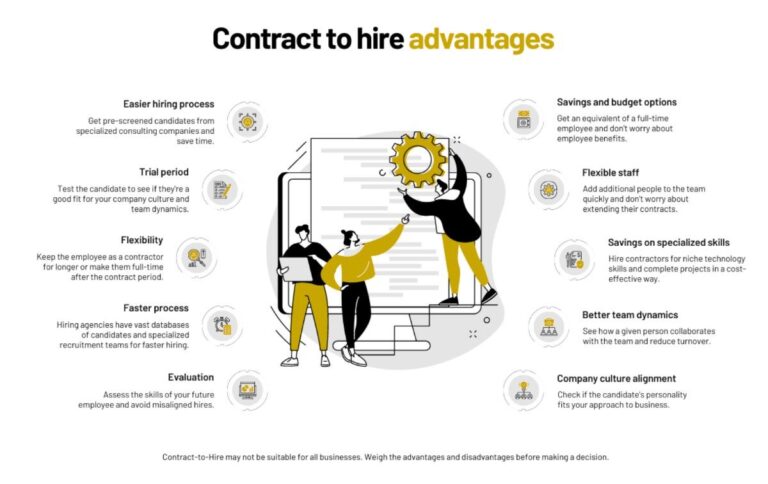
Contract hiring introduces the flexibility required to stabilise this environment before these issues escalate. By bringing in execution-ready specialists cloud architects, DevOps engineers, data experts, QA expansion support or transformation consultants enterprises can reinforce the exact points in the project where capability gaps create the most risk. These professionals integrate quickly, require minimal ramp-up and allow internal teams to maintain focus on strategic responsibilities rather than being consumed by urgent operational demands. This layered support model reduces burnout, preserves architectural discipline, strengthens delivery velocity and ensures that high-demand projects continue moving forward without compromising quality. In every enterprise that experiences fluctuating workload intensity, contract hiring becomes less of a staffing alternative and more of a core delivery strategy. The operational pressures that surface during high-demand enterprise projects often reveal how limited traditional hiring models can be. When delivery timelines tighten and capability gaps emerge faster than headcount approvals can move, organisations need more than theoretical workforce planning—they need talent frameworks that work in real time. This is precisely where contract hiring adds structural value. To highlight how deeply the model supports agility, capability alignment and delivery continuity, the following visual breaks down the practical advantages of contract-to-hire approaches used by leading enterprises. It provides a clear snapshot of why flexible hiring models outperform conventional recruitment when project intensity increases.
Key advantages of the contract-to-hire model, including flexibility, faster recruitment, specialised capabilities and stronger cultural alignment. Source: Maxima Consulting
This overview reinforces why enterprises rely on contract hiring when traditional recruitment cannot keep pace with delivery demands. By combining faster onboarding, specialised skill availability, and the ability to evaluate candidates in real project environments, the contract-to-hire model reduces the risks that typically slow down transformation programs. It also supports long-term workforce decisions by helping leaders understand whether a specialist can align with team culture, delivery expectations and architectural processes before committing to permanent employment. In high-demand project cycles, this structured flexibility becomes a critical advantage, allowing organisations to respond to capability gaps with precision rather than compromise.
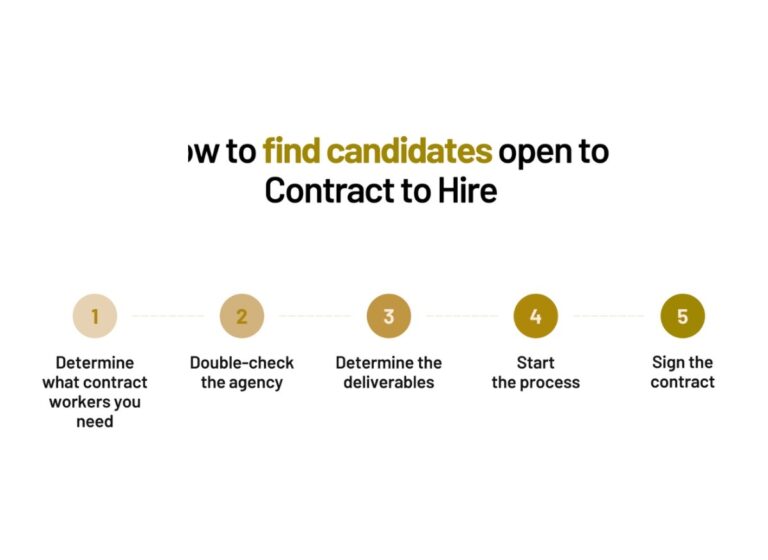
Beyond simply filling capability gaps, enterprises must also understand how to source the right contract talent with speed and accuracy. High-demand project cycles leave little room for trial-and-error, and teams need a clear, repeatable method for evaluating contract professionals before they are embedded into critical delivery streams. The following visual outlines a straightforward five-step framework that global organisations use to identify, validate and deploy contract-to-hire talent. It provides practical clarity on how enterprises can streamline selection, reduce onboarding friction and ensure that contract specialists arrive equipped to contribute immediately.
Five-step workflow for identifying and onboarding the right contract-to-hire candidates quickly and reliably. Source: Maxima Consulting
This simplified framework demonstrates how contract hiring becomes operationally efficient when paired with a structured approach. By clearly defining role requirements, validating agencies, aligning deliverables and formalising the engagement process, enterprises eliminate ambiguity and reduce the risk of mismatched expertise. This preparation ensures contract professionals integrate smoothly with internal teams, accelerating execution during the periods when timelines are most compressed. When combined with the broader advantages of contract-to-hire models, this workflow strengthens both speed and quality, supporting a more resilient and responsive delivery environment.
How Contract Hiring Strengthens Execution Speed and Operational Efficiency
As high-demand projects grow in complexity, enterprises begin to see inefficiencies that are not caused by lack of skill but by lack of bandwidth. Even highly capable teams struggle to maintain structured workflows when workload spikes become unpredictable. Documentation slows, testing cycles extend, review loops become inconsistent and technical decisions take longer as teams navigate competing priorities. These small inefficiencies accumulate quickly across engineering, cloud, data and transformation programs, creating friction in places where the organisation cannot afford delays. Contract hiring offers a practical solution by adding immediate execution strength, enabling teams to recover rhythm and eliminate the operational drag that emerges when internal capacity is overstretched. The introduction of contract specialists into an ongoing project environment creates a stabilising effect that internal teams often cannot achieve alone. These professionals bring experience from multiple enterprise transformations, giving them the pattern recognition and delivery discipline necessary to accelerate execution without compromising quality.
To remove these bottlenecks, contract specialists typically take ownership of execution-heavy responsibilities such as:
Pipeline optimisation, ensuring automation and deployment cycles move without interruption
Backlog refinement, helping teams prioritise tasks based on delivery urgency
QA scale-up, enabling faster testing cycles without sacrificing coverage
Environment stabilisation, reducing downtime and configuration issues
Data engineering support, accelerating pipelines and integration work
This separation of responsibility allows each group to operate within its highest value zone. Internal teams drive strategy and governance; contract talent drives throughput and delivery clarity. The result is a balanced operating model where project velocity improves and quality remains intact. Beyond speeding execution, contract hiring strengthens long-term operational efficiency by preventing teams from slipping into reactive work modes. When demand intensifies, organisations without flexible staffing models often shift into survival mode attempting to manage everything with limited capacity. This reactive posture leads to shortcuts, rushed decisions and compromised quality, which later manifest as technical debt or rework. Contract talent prevents this downward spiral by absorbing the pressure that would otherwise overwhelm internal staff. Their ability to step into critical workflows quickly gives enterprises more control over sequencing, clearer sprint cadence, predictable delivery cycles and improved collaboration across functions. In high-demand project environments, this operational stability becomes a decisive advantage, allowing enterprises to maintain both momentum and discipline as workloads expand.
How Contract Hiring Delivers Specialised Capability and Strategic Flexibility
High-demand enterprise projects rarely require the same skills across every phase of execution. Early stages might demand cloud architects and platform engineers, while mid-stage delivery depends heavily on DevOps capability, QA scale, data engineering support and integration expertise. Later phases may require optimisation specialists, governance leads or solution consultants who understand the nuances of stabilising production environments. Permanent teams seldom hold every one of these specialised skills internally and even when they do, those capabilities may already be fully allocated to ongoing initiatives. Contract hiring becomes the mechanism through which enterprises activate highly specific capabilities at the exact moment they are needed, without overextending internal structures or slowing progress.
The strategic value of this model becomes even more evident in transformation-heavy organisations. Contract talent brings deep, niche expertise accumulated from working across multiple architectures, industries and delivery environments. These professionals understand complex system behaviour, high-pressure delivery cycles, integration challenges and the architectural trade-offs that appear in accelerated projects. Their experience enables organisations to bypass lengthy knowledge-building phases and move directly into execution, reducing risk in areas where mistakes are costly such as cloud migration waves, security hardening, AI pipeline deployment or data platform optimisation. Instead of spending months searching for a permanent hire with a rare skill set, enterprises gain immediate access to the talent required to keep the project moving.
Beyond capability depth, contract hiring offers strategic flexibility that long-term staffing models cannot match. As project intensity fluctuates, contract professionals can join, scale, rotate or roll off without disrupting organisational structure or increasing fixed headcount commitments. This elasticity allows leaders to align talent allocation directly to project velocity, ensuring teams remain balanced even during peak pressure periods. It also protects internal teams from skill dilution enabling them to stay focused on core responsibilities rather than diverting their attention to tasks better suited to specialists. In environments where timing, accuracy and technical clarity determine the success of large-scale initiatives, this flexible capability layer gives enterprises the agility required to maintain momentum and deliver outcomes consistently.
Why Contract Hiring Needs the Right Guidance and Evidence to Support Enterprise Growth
While contract hiring provides speed, capability depth and delivery stability, its true impact depends on how effectively it is aligned with the broader enterprise strategy. Many organisations adopt contract talent reactively bringing in professionals only when pressure becomes unmanageable rather than integrating it into a long-term workforce plan. But without a structured approach, contract hiring operates in isolation, separated from architecture planning, capability mapping and project sequencing. The enterprises that benefit most from contract hiring are those that view it not as an emergency resource, but as a dynamic extension of their operating model. When contract talent is introduced with clarity around roles, responsibilities and value, it strengthens delivery ecosystems and supports transformation with far more predictability. This level of clarity becomes especially important as enterprises step into initiatives that demand rapid evolution in technical skills. AI deployment, cloud optimisation, platform refactoring, security uplift programs and large-scale data engineering efforts all require talent models that adjust as the technology shifts. Contract hiring, used strategically, gives organisations the ability to bring in specialised capability without destabilising existing teams or delaying progress.
But it also requires visibility leaders must understand when capability gaps are emerging, where delivery pressure is building, and which skills will be required next. Evidence-based planning, not intuition, is what ensures contract talent becomes a force multiplier rather than an operational patch. For organisations seeking guidance, Yallo helps enterprises integrate contract hiring into a broader, capability-driven workforce strategy. Through our talent services at Yallo, we support cloud, AI, data, DevOps and engineering initiatives with specialists who strengthen delivery exactly where complexity peaks. Leaders exploring this approach can review our Insights section for trends, frameworks and talent strategy analysis, and examine our Case Studies to see how enterprise clients accelerated execution, filled talent gaps and stabilised high-demand programs using contract hiring as a strategic lever. These resources provide the evidence and direction needed to ensure contract hiring becomes a sustainable advantage rather than a reactive response.