Build vs buy tech talent The model UAE companies are shifting to in 2025

How UAE enterprises are rethinking workforce models to meet the demands of cloud scale AI adoption and continuous transformation

November 26, 2025 6 mins Read Insight

The New Workforce Pressures Reshaping the Build vs Buy Tech Talent Decision in the UAE

The New Workforce Pressures Reshaping the Build vs Buy Tech Talent Decision in the UAE

UAE enterprises are facing unprecedented demand on their technology teams as cloud adoption accelerates and AI programs expand across business functions. What once operated as structured phases of modernization has evolved into a continuous cycle of transformation that spreads across infrastructure, automation, cybersecurity, data platforms and enterprise applications. This shift has elevated the build vs buy tech talent conversation into a strategic priority for leadership teams that must ensure their organizations have the capacity to execute at scale and with consistency. Traditional workforce models built around predictable hiring cycles and isolated skill development are no longer aligned with the pace and complexity of today’s transformation programs.

The challenge is amplified by the interconnected nature of modern technology environments. Cloud engineers work alongside data teams who collaborate with AI specialists who depend on security and automation structures that must be continually refined. This convergence increases the pressure on internal teams and exposes capability gaps that are difficult to resolve solely through internal development. At the same time, relying exclusively on external hiring introduces cost pressures and capability fragmentation. These realities are forcing UAE enterprises to rethink how they balance long-term talent development with strategic acquisition to maintain transformation momentum. The emerging workforce model depends on selecting the right combination of building internal capability and buying specialized talent at critical moments within the transformation lifecycle.

UAE enterprises are experiencing growing pressure on their technology teams as cloud expansion, AI initiatives and cybersecurity mandates accelerate simultaneously. This shift is reshaping the build vs buy tech talent discussion, turning it into a strategic priority that influences the pace and stability of enterprise transformation. Traditional hiring structures are no longer aligned with the velocity at which modern programs evolve, creating capability gaps that internal teams alone cannot absorb.

A major driver of this shift is the increased interdependence among engineering, data, AI and security disciplines. Delivery environments now require talent that can operate across multiple domains, adapt to new frameworks and respond to evolving architecture patterns. Internal capability development offers long term continuity but requires time and structured learning cycles. External hiring accelerates transformation but introduces integration and sustainability challenges. These realities are pushing organizations toward more intentional workforce models that balance internal depth with external support.

Key pressures shaping this shift include

  • Rapid acceleration of cloud, data and AI programs that outpace traditional hiring cycles

  • Increased workload volatility across transformation phases, creating unpredictable skill demands

  • Rising interdependence between engineering, security, automation and data functions

  • Longer learning curves for internal teams due to evolving architectures and delivery patterns

  • Fragmentation risks when relying exclusively on external specialists without structured integration

  • Leadership demand for consistent delivery momentum across multi year transformation programs

These pressures are converging to redefine how UAE enterprises approach capability and are shifting the build vs buy tech talent conversation from a binary choice to a strategic capability design question.

The Structural Factors Driving UAE Enterprises Toward a Hybrid Talent Model

The forces driving UAE organizations toward a hybrid talent strategy are not purely operational. They are structural and systemic, emerging from the evolving nature of the region’s technology ecosystem. As cloud platforms advance and AI capabilities proliferate across sectors, enterprises face the paradox of needing to build durable internal capability while simultaneously navigating immediate transformation demands that exceed existing capacity. No matter how strong an organization’s training frameworks may be, the learning curves associated with multi cloud architectures, AI governance, security engineering and advanced automation are steep and constantly shifting. This creates a strategic dilemma: internal teams must be nurtured for long-term competency, yet transformation cannot pause while capability matures.Compounding this tension is the competitive hiring landscape across the UAE. The region has become a magnet for global technology professionals, yet demand still outpaces supply in critical roles. Organizations can spend months searching for specialized talent, only to encounter rising salary benchmarks and high turnover among in-demand professionals. 

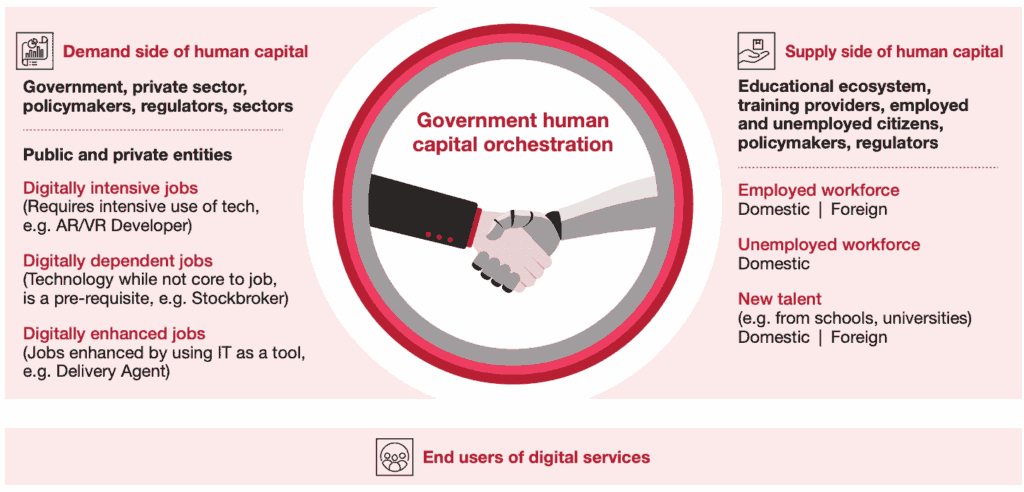
This has led many enterprise leaders to acknowledge that neither building nor buying talent alone can fully support the scale of transformation underway. Internal development ensures stability and cultural cohesion, but it cannot always meet urgent delivery timelines. External hiring accelerates execution, but it often results in fragmented capability structures that are difficult to sustain over time. As these forces converge, UAE enterprises are gradually embracing a more intentional hybrid model. This emerging approach blends structured internal capability development with targeted acquisition of external specialists who support peak delivery periods or bring niche expertise during pivotal phases of transformation. The logic is simple yet profound. Capability is no longer viewed as a static asset but as a dynamic system that must balance continuity, access to expertise and delivery velocity. The organizations that thrive in 2025 are not the ones who choose between building or buying talent. They are the ones who configure both strategies into a cohesive operating model that aligns with the pace of technological change. Within the broader talent challenges shaping UAE transformation agendas, one of the most influential dynamics is the growing interdependence between human capital supply and the evolving nature of digital work. Enterprises are no longer navigating capability decisions in isolation. They operate within a national ecosystem where government policy, education systems and workforce readiness collectively influence how quickly organizations can scale digital capacity. This relationship becomes clearer when examining the structural picture of how supply and demand for digital talent interact across the UAE economy.

Diagram showing the demand and supply sides of human capital in the UAE, including digitally intensive, digitally dependent and digitally enhanced jobs on one side, and employed, unemployed and new talent sources on the other, connected through government human capital orchestration.
Government human capital orchestration across the UAE talent ecosystem. Source: PwC

The doubling of demand from five thousand to ten thousand AI-related roles in just three years captures the scale of the shift underway. As enterprises embed AI into customer systems, operational workflows, risk engines and internal analytics environments, talent demand is rising faster than local supply pipelines. This increase reinforces the widening capability gap highlighted earlier in the section and illustrates why the competition for AI-skilled professionals will intensify further through 2030. The UAE’s digital strategy will increasingly depend on how effectively organisations can build and secure this AI-aligned layer of the tech workforce. This simplified framework demonstrates how contract hiring becomes operationally efficient when paired with a structured approach. By clearly defining role requirements, validating agencies, aligning deliverables and formalising the engagement process, enterprises eliminate ambiguity and reduce the risk of mismatched expertise. 

This preparation ensures contract professionals integrate smoothly with internal teams, accelerating execution during the periods when timelines are most compressed. When combined with the broader advantages of contract-to-hire models, this workflow strengthens both speed and quality, supporting a more resilient and responsive delivery environment. The visual highlights how the UAE’s talent ecosystem is structured around two interdependent forces. On the demand side, government entities, private sector organizations and regulators shape the need for digital capability across industries. These needs are expressed through various job categories ranging from digitally intensive roles that require deep technical specialization to digitally dependent and digitally enhanced roles where technology acts as an essential enabler. On the supply side, workforce readiness is influenced by education systems, training institutions, employed professionals, unemployed citizens and emerging graduates. The central concept of government human capital orchestration illustrates the critical role public policy plays in aligning these forces to ensure a steady and capable talent pipeline. For enterprises evaluating the build vs buy tech talent decision, this model demonstrates why talent strategies cannot be isolated within HR. They must align with broader ecosystem realities that determine how quickly and sustainably capability can be scaled.

Understanding the hidden inefficiencies that prevent enterprises from relying on a single capability path

The conventional frameworks used to evaluate build vs buy tech talent decisions were shaped in an era when transformation followed predictable cycles. Organizations could invest in long-term capability development, supplement with external resources when necessary and maintain a clear sense of ownership across delivery domains. These assumptions no longer hold. The speed at which cloud architectures evolve, the complexity introduced by AI adoption, and the rising dependency on automation all contribute to a landscape where capability is in constant motion. Teams face shifting requirements, new orchestration patterns and changing security expectations that destabilize traditional workforce planning. The result is a structural mismatch between what enterprises expect from internal talent and what those teams can realistically deliver in environments defined by rapid technical evolution. The breakdown becomes even more pronounced when leaders examine capability through the lens of transformation orchestration. Large programs no longer progress through neatly staged phases. They overlap, accelerate and expand as new business needs emerge. This creates pressure points where internal teams experience bandwidth fatigue and external specialists must integrate quickly into unfamiliar environments. The idea that an enterprise can simply build capability organically or acquire all required expertise externally becomes unsustainable. Internal teams require time to mature, yet transformation cannot pause.

External professionals can accelerate progress, yet they often lack the contextual understanding needed for long-term stability. These contradictions reveal why the traditional binary model collapses when applied to modern delivery environments. This is leading senior technology leaders across the UAE to embrace a more nuanced understanding of capability economics. The question is no longer whether to build or buy talent. It is about understanding the lifecycle of capability and recognizing when internal teams should lead, when external specialists should augment and how knowledge transfer should be embedded into the overall operating model. The collapse of traditional frameworks is not a failure of strategy but a reflection of an environment where flexibility, multi disciplinary coordination and continuous learning have become the hallmarks of sustainable transformation.

The Emerging Hybrid Capability Architecture Defining UAE Transformation in 2025

The shift toward a hybrid capability architecture in the UAE reflects a broader recognition that modern transformation cannot be sustained through rigid workforce decisions. Enterprises are acknowledging that capability must operate as a dynamic system where internal teams and external specialists interact fluidly rather than occupying separate, siloed lanes. Internal talent represents the institutional backbone of the organization. They understand the business context, the regulatory landscape and the intricate history of past technology decisions that shape current constraints. Their role is essential for continuity and long-term stewardship. Yet their ability to scale quickly or absorb entirely new disciplines is naturally limited, particularly when technology markets introduce new paradigms at accelerating rates. External specialists, on the other hand, contribute the velocity and depth that transformation programs require in their most complex phases. They bring exposure to global patterns, evolving design practices and specialized skill sets that would take years for internal teams to develop. But their integration must be carefully structured. Without a clear operating model, external expertise can create dependency rather than empowerment. 

The most forward-looking UAE enterprises are resolving this tension by embedding external experts into a transformation system designed around continuity, knowledge transfer and adaptability. Instead of operating as an outsourced extension, these specialists become catalysts within a carefully governed environment that ensures their contribution elevates internal capability rather than replacing it. The result is a hybrid model that transcends the traditional build vs buy tech talent debate entirely. It recognizes that transformation is not a linear undertaking but an evolving ecosystem that requires continuity, adaptability, specialization and speed. The organizations that succeed in 2025 are those that choreograph these elements into a single capability architecture that remains resilient even as new technologies and delivery demands continue to reshape the enterprise landscape. This architecture is not a compromise between building and buying talent but a new discipline that aligns human capital, transformation design and delivery economics into a unified system.

Why the future of enterprise technology depends on balanced operating models and long term capability stewardship

As 2025 approaches, UAE enterprises are beginning to appreciate that the most important outcome of the build vs buy tech talent debate is not choosing a side but designing a capability system that endures. Transformation has become a living environment where cloud platforms evolve in real time, AI capabilities mature rapidly and delivery patterns shift with new tools and architectural paradigms. In such a landscape, internal teams act as the strategic anchor of the organization. They hold the historical memory, governance logic and operational intuition that cannot be replicated through external hiring. Their presence ensures that transformation remains grounded in business reality even as technology accelerates around them.External specialists offer a complementary dimension. They bring global perspective, rare skills and the ability to unlock momentum during the most complex phases of delivery. Their role is not to replace internal capability but to amplify it, to shorten learning cycles and to introduce precision during moments of technological complexity. When enterprises build an operating model that blends these dimensions seamlessly, they create a capability architecture that can withstand volatility, absorb new disciplines and preserve long term clarity. This hybrid foundation becomes a defining characteristic of the enterprises that thrive in the next chapter of regional modernization.

This view also reframes how leaders think about sustainability in technology transformation. It is no longer defined by static resources or fixed teams but by the organization’s ability to expand and contract capability intelligently. The future of UAE enterprise technology will depend on systems that prioritize resilience, adaptability and disciplined knowledge transfer. The most forward looking organizations are already shaping such systems, combining internal stewardship with targeted external expertise in ways that create lasting strategic advantage. For enterprises seeking structured guidance through this shift, Yallo supports capability design, transformation operating models and workforce modernization across cloud, AI and engineering disciplines. Our Insights and Case Studies provide deeper analysis and real world examples that help organizations understand how leading enterprises are adopting hybrid capability models that balance internal talent strength with external specialization. These resources allow leaders to evaluate their current maturity and chart a more resilient capability strategy for the years ahead.
Leave a Comment

Your email address will not be published. Required fields are marked *

Scroll to Top