
Warp Launches Diff-Tracking Tools to Transform AI Coding Oversight
Warp Code is here to change how developers work with AI coding agents. Announced on September 3, 2025, the new toolset introduces real-time difference tracking and a pair-programming-like interface to give developers more visibility into what their AI assistants are doing.
Founder Zach Lloyd explained the motivation: “With other command-line tools, you’re crossing your fingers and hoping the output is something you can merge. We want to create a much tighter feedback loop.”
How Warp Code Works
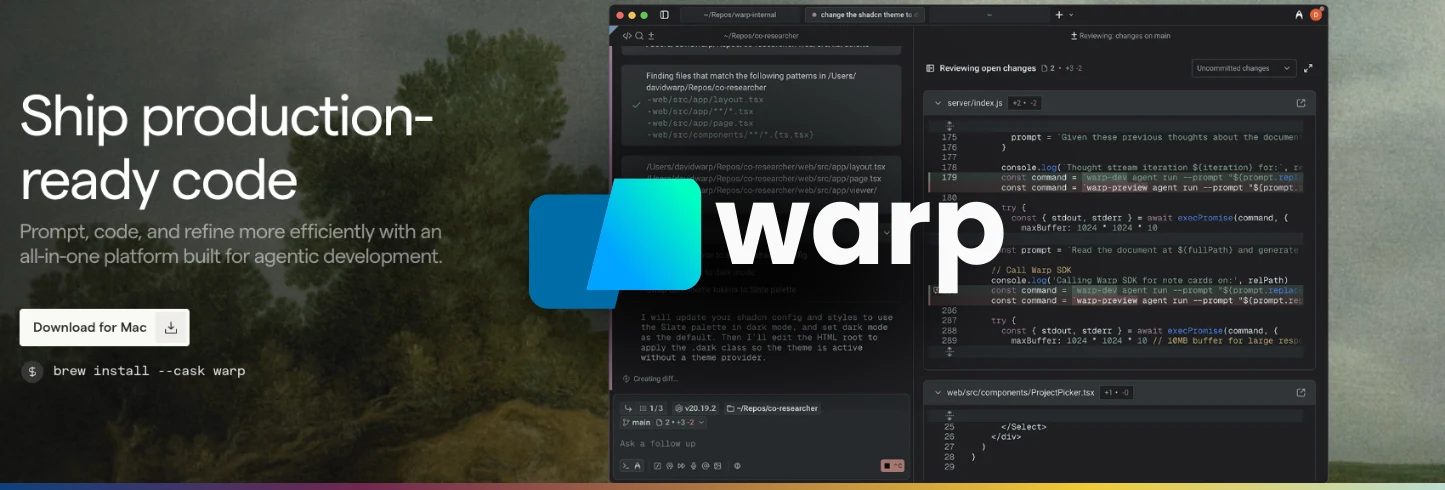
Warp Code makes every AI coding step visible. As the AI agent writes code, users can see each modification (“diff”), comment on changes, and make manual edits as needed. Key features include:
- Step-by-step diffs: Track every change in real time.
- Interactive feedback: Highlight lines for context or ask clarifying questions.
- Compiler troubleshooting: Automatically detects and resolves errors when code is compiled.
- Familiar workflow: A command input bar, response window, and side panel for diffs — all in one interface.
This transparency aims to build trust in AI-driven programming, making coding agents feel less like black boxes and more like collaborators.
Competing in the AI Coding Race
Warp enters a competitive space alongside:
- Non-code platforms like Lovable
- AI editors such as Cursor and Windsurf
- Foundation-model tools like Anthropic’s Claude Code and OpenAI’s Codex
Despite being smaller, Warp is growing fast. The company reports 600,000 active users and adds $1 million in ARR every 10 days, proving demand for tools that give developers more control over AI coding.
Why It Matters for Businesses
For organizations adopting AI coding tools, oversight and trust are critical. Blindly relying on AI-generated code can introduce risks from buggy deployments to hidden vulnerabilities.
Warp Code’s diff-tracking system provides a transparent development process that lets engineers review, question, and adjust AI contributions in real time. For companies, this means:
- Faster adoption of AI coding agents without losing accountability.
- Better collaboration between human developers and AI assistants.
- Reduced risk of errors slipping into production.
Stay Informed with Yallo Group!
Unlock the latest insights, news, and expert advice—straight to your inbox!
👉 Subscribe to our Newsletter
📝 Explore Our Latest Blogs
