Target Data Breach 2013: 6 Critical Lessons in Enterprise Governance
How a $250M data breach revealed the dangers of data silos and redefined enterprise-wide governance, security, and integration practices.
What Happened: The Siloed Systems That Enabled a Massive Data Breach
In 2013, U.S. retail giant Target suffered one of the most well-known cyber breaches in corporate history. Hackers gained access to the company’s systems via compromised credentials from a third-party HVAC vendor. Once inside, they navigated across departments undetected, ultimately extracting 40 million debit and credit card records along with 70 million customer details including names, addresses, and emails.
Key contributing factor? Deep operational silos across departments and systems that prevented real-time threat detection and response. Lack of coordination and centralized visibility turned what could’ve been a containable breach into a full-scale crisis.
Image source- Investopedia
Financial and Legal Fallout
Over $250 million in total costs, including:
$18.5 million multistate settlement
$10 million class action lawsuit payout
Millions more in fines, legal fees, PR recovery, and technology overhauls
C-suite disruption: CIO and CEO resigned amid post-breach investigations
Reputational damage: Erosion of customer trust during peak retail seasons
Leadership Response: A Unified Governance Overhaul
Target took bold corrective steps that reshaped its IT and data management landscape:
Enterprise-Wide Data Governance: Broke down silos and centralized data oversight
Cross-Functional Security Teams: Merged cybersecurity, IT, fraud detection, and compliance
Enhanced Access Controls: Implemented least-privilege policies and multi-factor authentication (MFA)
Threat Intelligence and SIEM: Deployed enterprise-grade monitoring and behavioral analytics systems
Months 4–8: Organizational restructuring, creation of governance council, system integrations
Months 9–12: Staff retraining, vendor risk reassessments, and implementation of long-term protections
The overhaul concluded within a year and became a benchmark for retail industry cyber readiness.
Competitive Advantage Achieved
After recovery, Target turned its crisis into operational strength:
Improved Efficiency: Unified systems enabled faster, safer access to data across departments
Stronger Fraud Prevention: Real-time correlation and visibility enabled proactive response to suspicious behavior
Customer Confidence Restored: Transparency and protection measures reassured stakeholders
Target’s evolution from breach victim to security-forward enterprise has since positioned it as a model for incident-driven transformation.
What IT Leaders Must Learn: 6 Critical Lessons in Data Governance and Security Integration
1. Eliminate Data Silos Through Enterprise Integration
What Went Wrong:
Disconnected systems across finance, operations, and security blocked anomaly detection and delayed response.
Best Practices:
Enterprise Data Hubs: Consolidate critical data across teams using integration platforms.
Unified Data Schema: Standardize metadata and formats to ensure interoperability.
Data Governance Committee: Include IT, legal, operations, and business in ongoing alignment reviews.
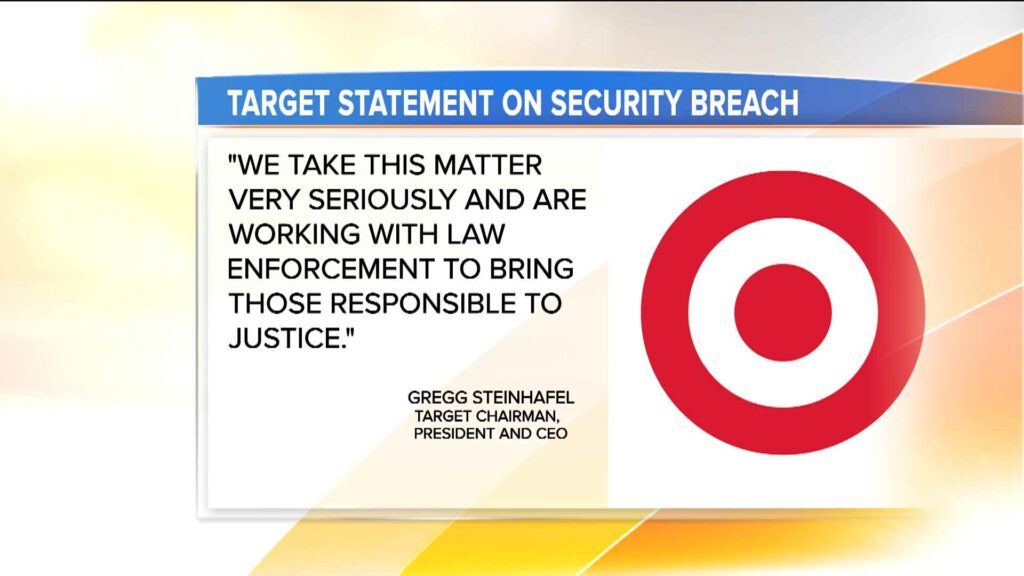
image source- NBC News
2. Enforce Zero Trust and Least-Privilege Access
What Went Wrong:
Attackers escalated privileges and moved laterally through systems unchecked.
Best Practices for IT Leaders:
Zero Trust Architecture: Verify every user, device, and connection, regardless of origin.
RBAC and ABAC Models: Restrict access based on roles, conditions, and context.
Periodic Entitlement Reviews: Audit and clean access permissions regularly.
3. Invest in Threat Detection and Behavioral Monitoring
What Went Wrong:
Target had alerting tools in place, but teams didn’t correlate data or escalate issues promptly.
Best Practices for IT Leaders:
Security Information and Event Management (SIEM): Centralize and correlate logs across the enterprise.
UEBA Tools: Use machine learning to detect abnormal behaviors within networks and applications.
Threat Intel Feeds: Integrate global intelligence to anticipate attack vectors.
4. Formalize Third-Party Risk Management
What Went Wrong:
The breach originated through a third-party HVAC vendor with elevated system access.
Best Practices for IT Leaders:
Vendor Risk Assessments: Evaluate and score vendors based on data exposure and compliance.
Contractual Security Clauses: Mandate encryption, monitoring, and breach notification timelines.
Zero-Trust Partner Access: Isolate external vendors from core systems unless absolutely necessary.
image source- Freepik/stockimages
5. Train Staff and Align All Business Units on Security Protocols
What Went Wrong:
Post-incident, Target invested heavily in employee education and awareness.
Best Practices:
Security Awareness Programs: Conduct quarterly phishing tests and training refreshers.
Cross-Departmental Drills: Ensure each unit knows its role in breach response scenarios.
Internal Newsletters and Alerts: Promote security culture with frequent updates.
6. Build a Crisis-Ready Governance and Response Framework
What Went Wrong:
Initial incident response was delayed due to unclear ownership and inconsistent reporting lines.
Best Practices for IT Leaders:
Breach Playbooks: Define responsibilities, escalation paths, and decision workflows.
Governance Charters: Document roles for data owners, stewards, and custodians.
Post-Breach RCA Reviews: Incorporate feedback loops for continuous improvement.
Conclusion: Governance is the Glue That Holds Enterprise Security Together
Target’s 2013 breach wasn’t just about compromised card data—it was about compromised coordination. The fragmented architecture, siloed governance, and inadequate access controls allowed a minor intrusion to balloon into a major catastrophe.
The recovery, however, showed the power of unified governance, centralized visibility, and integrated risk management. For IT and business leaders, the imperative is clear:
Break down silos
Treat governance as a dynamic, cross-functional asset
Invest in data integrity as seriously as data availability
image source- BBC News
Let YALLO Solve Your Talent Challenges
Struggling with complex IT needs? Partner with YALLO for tailored solutions that reduce costs, improve quality, and deliver results. Book an appointment today to discuss how we can help your business thrive.